They are not the same thing.
Continuous-flow oxygen runs at a steady litres-per-minute rate. Pulse-dose oxygen delivers a measured burst when the concentrator detects inhalation. Understanding that difference is essential before comparing home and portable oxygen concentrators.
What is the difference between continuous flow and pulse dose oxygen?
Continuous flow supplies oxygen continuously at a set flow rate, usually expressed in litres per minute (LPM). Pulse dose supplies oxygen intermittently: the machine detects the start of a breath and delivers a measured pulse, or bolus, during inhalation.
Pulse settings describe device-specific oxygen delivery, while continuous flow is measured as a steady litres-per-minute rate. The numbers should not be converted or matched by assumption.
This distinction matters because many lightweight portable oxygen concentrators use pulse-dose delivery, while many stationary home oxygen concentrators use continuous flow. Some larger portable or transportable machines can offer both modes.
Two delivery methods, one important difference
Continuous flow keeps running
Oxygen is supplied through the cannula continuously, during inhalation, exhalation and the pause between breaths.
Pulse dose reacts to inhalation
A sensor detects the beginning of a breath and the concentrator releases a measured pulse of oxygen.
Pulse dose helps reduce waste
Because oxygen is delivered around inhalation instead of flowing constantly, pulse technology can support smaller, battery-powered portable designs.
The prescription still comes first
The correct delivery method and setting should be confirmed with an appropriate healthcare professional rather than chosen from the machine’s highest number.
Continuous flow vs pulse dose oxygen concentrators
| Feature | Continuous flow | Pulse dose |
|---|---|---|
| Delivery | Steady oxygen flow whether the user is inhaling or exhaling | Measured oxygen pulse triggered when inhalation is detected |
| How it is expressed | Usually litres per minute (LPM) | Device-specific setting / bolus delivery |
| Common machine type | Stationary home concentrators and some larger portable/transportable units | Common in lightweight portable oxygen concentrators |
| Battery efficiency | Usually more demanding when used on a battery-powered device | Generally more battery-efficient because delivery is breath-triggered |
| Breath detection | Not required for basic delivery | Required — the device must detect inhalation to trigger a pulse |
| Setting equivalence | A prescribed LPM is a continuous flow rate | A numerical pulse setting should not be assumed to equal the same LPM |
| Best choice | The mode and setting that meet the user’s prescribed oxygen requirement and have been confirmed as appropriate by a healthcare professional | |
Why pulse setting 2 does not mean 2 litres per minute
Continuous-flow and pulse-dose numbers describe different things. Continuous flow is a steady rate measured in LPM. Pulse dose delivers a discrete volume of oxygen with each detected breath, and the amount delivered at a particular setting varies by device design.
Continuous-flow number
- Represents a continuous rate of oxygen flow.
- For example, 2 LPM means oxygen is flowing at that rate continuously.
- The prescribed LPM should be set exactly as directed.
Pulse-dose setting
- Controls a device-specific breath-triggered oxygen dose.
- Actual bolus size and delivery behaviour vary between models.
- A setting number should never be converted to continuous LPM by guesswork.
Which type of oxygen concentrator may suit different needs?
The right choice is not simply “portable versus home.” Start by confirming the oxygen delivery method required by the prescription, then compare mobility, battery life, weight, power, noise, travel needs and after-sales support.
Continuous-flow home concentrators are commonly used for prescribed stationary oxygen therapy and can be designed for extended daily operation.
Pulse-dose portable concentrators can be much lighter and easier to carry when pulse delivery is suitable for the user.
Battery-powered portable models can support travel, but airline acceptance and the user’s prescribed delivery requirements must both be checked.
Some larger machines offer both continuous and pulse modes, which can provide flexibility when the prescribed use requires it.
See the difference in real oxygen concentrators
These models show why the delivery method should be checked before comparing size, battery or flow-setting numbers.
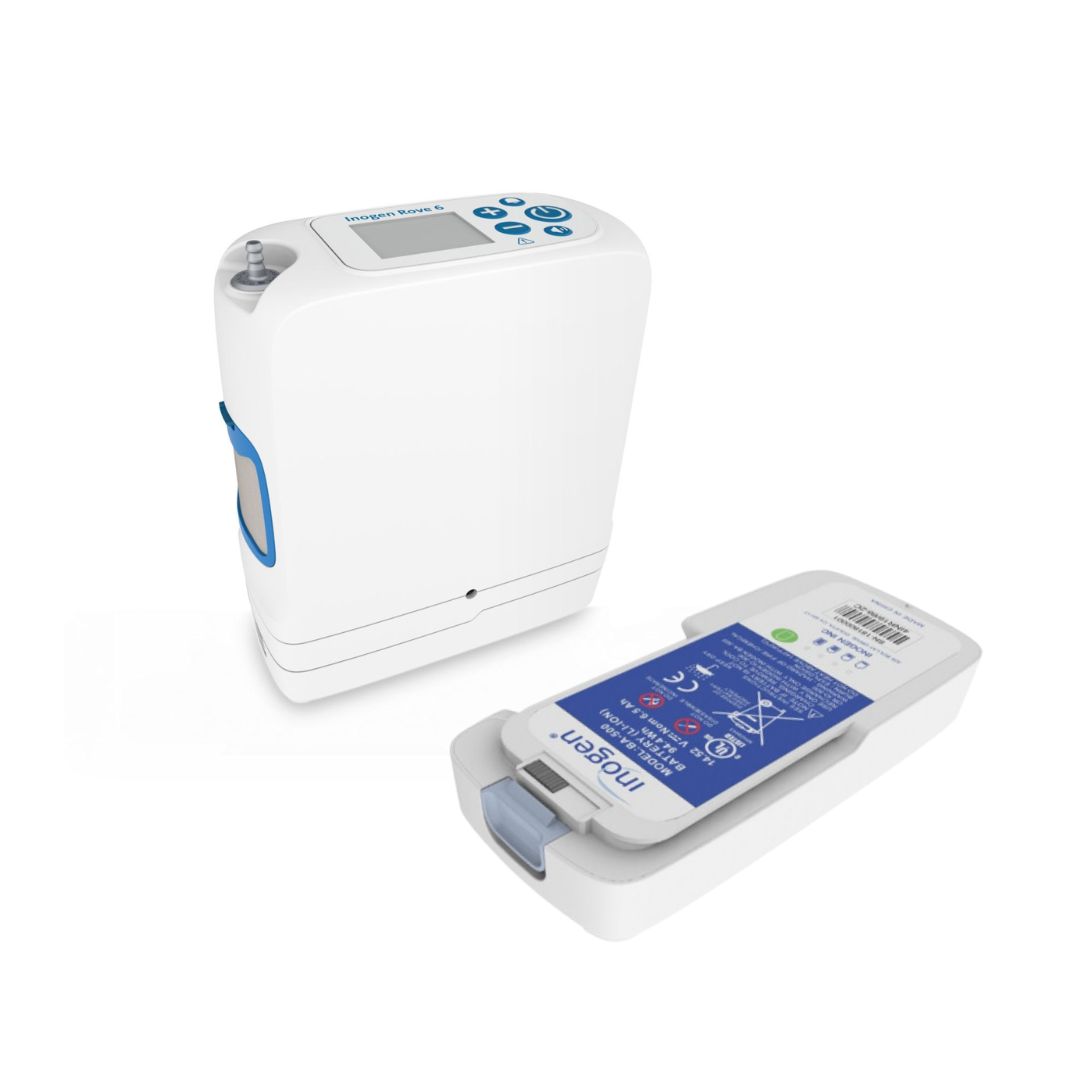
Inogen Rove 6
A lightweight portable oxygen concentrator designed around pulse-dose delivery for mobility and travel.
- Pulse settings 1–6
- Battery powered
- FAA-approved model
Aerti AE-5-S
A stationary home oxygen concentrator with adjustable continuous flow from 1–5 LPM.
- 1–5 LPM
- Home use
- 24-hour operation design
Lovego LG103
A larger portable concentrator offering both pulse-dose and continuous-flow modes for users whose prescription requires more flexibility.
- Dual delivery modes
- Battery powered
- Higher output class
What else should you check before buying an oxygen concentrator in South Africa?
Your exact prescription
Confirm whether the prescription specifies continuous flow, pulse dose or different requirements during rest, walking and sleep.
Power and backup planning
Stationary concentrators need mains electricity. Battery-powered POCs need realistic runtime planning and access to charging.
Service and replacement parts
Check warranty support, battery availability, filters, sieve-bed servicing and access to local repairs before purchase.
Travel requirements
If flying, confirm airline rules, battery requirements and whether your exact portable concentrator is accepted before travel.
Know your prescribed delivery method? Now compare the right machines.
Browse OxyMed’s portable and home oxygen concentrators by delivery type, mobility, battery options and technical specifications. If you need help understanding product features, the OxyMed team can help you compare models without changing or interpreting your medical prescription.
Continuous flow vs pulse dose: questions answered
Is pulse dose the same as continuous flow?
No. Continuous flow provides oxygen continuously at a set litres-per-minute rate. Pulse dose delivers a measured burst of oxygen when inhalation is detected.
Is pulse setting 2 the same as 2 LPM?
No. A numerical pulse setting should not automatically be treated as the same number of litres per minute in continuous-flow mode. Pulse-dose output is device-specific and depends on factors such as bolus size and breathing behaviour.
Why do many portable oxygen concentrators use pulse dose?
Pulse delivery releases oxygen around inhalation instead of running continuously. This can make oxygen use more efficient and helps manufacturers build smaller, lighter battery-powered concentrators for mobility.
Can I use a pulse-dose oxygen concentrator while sleeping?
That depends on the user, prescription and device. Pulse-dose machines must detect inhalation, and performance can vary with breathing pattern. Confirm suitability and the prescribed setting with a healthcare professional before relying on pulse-dose oxygen during sleep.
Can a portable oxygen concentrator provide continuous flow?
Some can, but many lightweight portable concentrators are pulse-dose only. Larger portable or transportable models may offer both continuous-flow and pulse-dose modes. Check the exact product specification.
Which is better: pulse dose or continuous flow?
Neither delivery method is universally better. The appropriate option is the one that meets the user’s prescribed oxygen needs and works safely for the intended activities, including rest, movement, sleep and travel.
How do I know which oxygen concentrator I need?
Start with the oxygen prescription and confirm the required delivery method and setting with an appropriate healthcare professional. Then compare concentrators that meet those requirements by weight, battery life, power, noise, warranty, servicing and travel suitability.
- American Lung Association — portable oxygen concentrator guidance
- Inogen — pulse dose vs continuous flow oxygen delivery
- CAIRE — oxygen concentrator delivery modes and device guidance