Obstructive sleep apnoea.
Understand the signs. Know your next step.
Loud snoring, interrupted breathing and waking up tired deserve attention. Learn how sleep apnoea is diagnosed, what treatment involves, and what to check before buying CPAP equipment in South Africa.
Repeated breathing pauses, gasping and daytime sleepiness are reasons to speak to a clinician.
Prescribed CPAP or APAP therapy uses pressurised air through a mask during sleep.
What is obstructive sleep apnoea?
Obstructive sleep apnoea (OSA) is a condition in which the upper airway repeatedly narrows or closes during sleep, reducing or stopping airflow despite the body trying to breathe. These interruptions can disturb sleep and lower blood oxygen levels. Diagnosis requires a sleep assessment and appropriate testing; treatment often includes CPAP or APAP.
“Sleep apnoea” and “sleep apnea” mean the same thing. OSA involves an airway blockage. Central sleep apnoea involves problems with the brain’s breathing signals, so the two conditions should not be treated as interchangeable.
A machine purchase does not establish a diagnosis. Speak to your GP or a sleep specialist about symptoms before choosing therapy equipment.
Sources: NHLBI: What is sleep apnea?.
What are the symptoms of sleep apnoea?
Common warning signs include loud snoring, witnessed breathing pauses, waking with a gasp, and excessive daytime sleepiness. A partner may notice interrupted breathing before you do.
Breathing changes at night
Snoring interrupted by silence, repeated gasping or choking, or another person noticing that your breathing stops and starts.
Sleepiness during the day
Struggling to stay awake, feeling tired despite time in bed, or finding it harder to concentrate.
Uncomfortable mornings
A dry mouth or morning headache may accompany disturbed sleep, although these symptoms have other possible causes.
Repeated awakenings
Broken sleep, difficulty staying asleep or frequently waking to pass urine can also warrant a discussion with your clinician.
Sources: NHLBI: Sleep apnea symptoms.
Who is more likely to develop OSA?
Risk factors include excess weight, increasing age, family history and airway anatomy, such as enlarged tonsils or a relatively small jaw. Alcohol can worsen airway relaxation. OSA can also affect people who are not overweight; body size alone cannot rule it out.
Sources: NHLBI: Causes and risk factors.
Why does untreated sleep apnoea matter?
OSA can affect alertness and is associated with cardiovascular problems, including high blood pressure and stroke. Symptoms deserve assessment even when snoring feels familiar or has continued for years.
Sources: American Thoracic Society: Obstructive sleep apnea in adults.
How is sleep apnoea diagnosed?
A clinician reviews your symptoms and medical history, then arranges a suitable sleep study. The results help identify the type and severity of sleep-disordered breathing and guide treatment.
- Prepare for your appointment. Note your sleep pattern, daytime symptoms, medicines and any breathing pauses someone has observed.
- Discuss the right test. A sleep laboratory study records sleep and breathing. A clinician may choose a home sleep apnoea test for an appropriate patient.
- Review the results. Ask what the findings mean, which treatment is recommended and how its effectiveness will be checked.
Sources: NHLBI: Diagnosing sleep apnea.
A home test can be appropriate for selected adults with suspected moderate to severe OSA and no complicating conditions. It needs clinical interpretation. A smartwatch alert, snoring recording or fingertip oxygen reading cannot replace that assessment.
Sources: AASM: Clinical use of home sleep apnea tests.
What does AHI mean on a sleep study?
The apnoea–hypopnoea index (AHI) counts apnoeas and hypopnoeas per hour of sleep. These are episodes of stopped or reduced breathing. Common adult severity bands are:
| Classification | AHI | How to use the result |
|---|---|---|
| Mild | 5 to less than 15 | Symptoms and other health conditions still matter. |
| Moderate | 15 to less than 30 | Discuss treatment and follow-up with your clinician. |
| Severe | 30 or more | Needs a clear treatment plan and monitoring. |
These adult categories are not a self-diagnosis tool. Home tests may report a respiratory event index (REI), using monitoring time rather than measured sleep time. Your clinician should interpret the full report, including oxygen levels and symptoms.
Sources: International Consensus Statement on Obstructive Sleep Apnea.
How is obstructive sleep apnoea treated?
Positive airway pressure (PAP) is a common OSA treatment. A mask delivers air under pressure to help prevent airway collapse. The right mode depends on your assessment, treatment response and other health conditions.
| Therapy | How it works | What to know |
|---|---|---|
| CPAP | Delivers one prescribed treatment pressure. | Can treat OSA across severity levels; it is not limited to mild or moderate OSA. |
| APAP / Auto-CPAP | Adjusts pressure within a clinician-set range. | An established option for many adults with OSA. Automatic adjustment does not remove the need for a diagnosis or follow-up. |
| Bilevel PAP / BPAP | Uses a higher pressure for inhaling and a lower pressure for exhaling. | Used for selected clinical needs. It is not the routine next step simply because OSA is severe. |
The AASM recommends CPAP or APAP for ongoing adult OSA treatment and generally favours these over bilevel PAP for routine OSA. Your clinician should choose the mode and settings.
Sources: AASM: Guideline on PAP therapy for adult OSA.
Can sleep apnoea be treated without CPAP?
Some people may benefit from a custom oral appliance, positional therapy, weight management or selected surgical procedures. Suitability depends on the cause and severity of OSA. A custom oral appliance is different from an off-the-shelf snoring mouthguard.
Healthy sleep habits, physical activity, limiting alcohol and stopping smoking can support care. Ask your clinician how these fit your treatment plan; do not stop prescribed therapy on your own.
Sources: NHLBI: Sleep apnea treatment options.
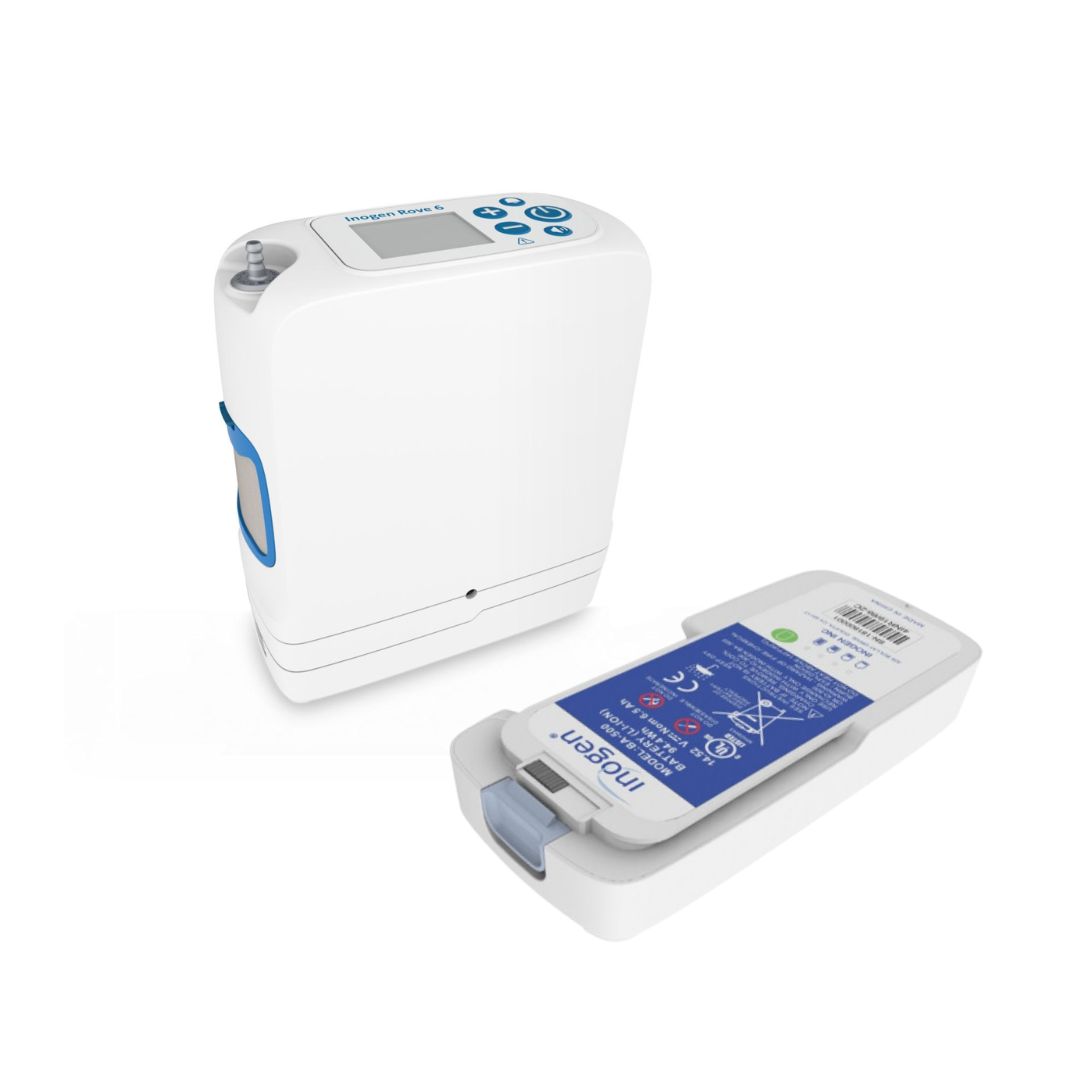
Is CPAP the same as an oxygen concentrator?
No. CPAP provides air pressure to keep the upper airway open. An oxygen concentrator provides oxygen-enriched gas for a prescribed oxygen requirement. The devices do different jobs.
CPAP / APAP
Targets the airway obstruction that causes OSA. Treatment pressure and mask fit are central to how it works.
Oxygen therapy
Raises the oxygen concentration being breathed in. Oxygen alone does not reliably treat the airway obstruction in OSA.
Some patients need both therapies, but the combination, equipment connections and settings require professional guidance.
If oxygen has also been prescribed, read OxyMed’s guide to continuous flow vs pulse dose oxygen to understand those separate delivery methods.
Sources: American Thoracic Society: Sleep-disordered breathing research statement.
Which CPAP mask should you choose?
Choose a mask that seals comfortably and suits your breathing, face shape and sleeping position. There is no single best mask for everyone.
Nasal mask
Seals around the nose. May suit people who breathe comfortably through their nose during sleep.
Nasal pillows
Small cushions sit at the nostril openings. An option for people who prefer a compact interface.
Full-face mask
Covers or seals around both nose and mouth. May help when mouth breathing or nasal blockage makes nasal therapy difficult.
Ask for help checking the seal in your usual sleeping position. Persistent leaks or discomfort are reasons to review the fit, size or style.
For a closer comparison of coverage, comfort and fit, read our full-face vs nasal vs nasal pillow CPAP mask guide.
Sources: Resmed: CPAP mask types and fit.
Explore OxyMed CPAP masks and accessoriesWhat should you check before buying a CPAP machine in South Africa?
Bring your prescribed treatment requirements to the equipment comparison. A useful quote shows what you receive, what support is available and what you may need to buy separately.
Our guide to choosing a CPAP machine in South Africa provides more detail on equipment features and comfort considerations.
Mode and setup
Confirm that the machine supports the prescribed therapy. Ask who will configure it and how your clinician can review therapy information.
The complete package
Check whether the price includes a mask, tubing, humidifier, power supply and carry bag. Ask about mask sizing before ordering.
Power interruptions
For outages or load shedding, ask for a backup solution confirmed compatible with the exact machine. Request runtime information for your intended settings and humidifier use.
Long-term support
Ask about warranty terms, repair arrangements and replacement cushions, filters and tubing. Confirm delivery timing for your address.
How much does a CPAP machine cost?
Compare the total setup cost rather than the machine price alone. Check the current OxyMed CPAP range, then request an itemised quote including accessories, delivery and any backup power equipment. Prices and package contents can change.
Will medical aid cover CPAP?
Before buying, ask your medical scheme whether your plan covers sleep testing and prescribed equipment, whether pre-authorisation is required, which documents it needs and whether supplier rules apply. Get the response in writing; a supplier quote is not confirmation of cover.
What if CPAP feels uncomfortable at first?
Getting used to a mask and airflow can take time. Ask for help early if leaks, dryness, pressure discomfort or a feeling of claustrophobia are stopping you from using treatment.
- Practise while awake. Short periods wearing the mask can help you become familiar with it.
- Review the fit. Check the mask while lying down with the machine running.
- Discuss comfort options. Your provider can advise on humidification, ramp features or a different interface.
- Keep follow-up appointments. Report ongoing sleepiness and discuss treatment data with your clinician.
Use prescribed PAP during all sleep, including naps. Follow the manufacturer’s cleaning and replacement instructions, and let your clinician manage changes to treatment pressure.
Sources: NHLBI: Living with sleep apnea.
Have a treatment plan? Compare the equipment that fits it.
Explore OxyMed’s CPAP machines, masks and accessories, or ask for a quote based on your prescribed requirements. Confirm current availability, package contents and support before ordering.
Sleep apnoea: your questions answered
Is loud snoring always sleep apnoea?
No. Snoring alone does not confirm OSA. Snoring with witnessed breathing pauses, gasping or daytime sleepiness is a reason to seek assessment.
Can you have sleep apnoea without being overweight?
Yes. Airway anatomy, age and family history can also contribute. A healthy body weight does not rule out OSA.
Can a home sleep test diagnose sleep apnoea?
A clinician-arranged home sleep apnoea test can diagnose OSA in suitable adults. Your clinician should choose the test and interpret the results; a consumer sleep tracker is not a substitute.
Is APAP better than CPAP?
Neither is best for everyone. CPAP uses a fixed prescribed pressure; APAP adjusts within a prescribed range. Your clinician should select the mode that suits your needs.
Does severe sleep apnoea always require a bilevel machine?
No. CPAP or APAP can be appropriate for severe OSA. The AHI severity label alone does not determine which machine you need.
Can an oxygen concentrator replace CPAP?
No. Oxygen therapy does not provide the same airway support as CPAP. Do not substitute oxygen for prescribed PAP treatment; combined therapy needs professional guidance.
Does CPAP cure sleep apnoea permanently?
CPAP controls airway obstruction while it is used. Do not assume OSA has resolved because you feel better. Discuss reassessment before stopping treatment.
Where can I buy CPAP machines and masks in South Africa?
You can compare CPAP machines and masks and accessories at OxyMed. Confirm suitability against your prescribed treatment and ask about current stock and package contents.
Medical references
This adult patient guide draws on the medical organisations and clinical publications listed below. Related reading and equipment links lead to OxyMed’s own guides and collections.
- NHLBI: What is sleep apnea?
- NHLBI: Sleep apnea symptoms
- NHLBI: Causes and risk factors
- NHLBI: Diagnosing sleep apnea
- AASM: Clinical use of home sleep apnea tests
- International Consensus Statement on Obstructive Sleep Apnea
- AASM: Guideline on PAP therapy for adult OSA
- American Thoracic Society: Sleep-disordered breathing research statement
- NHLBI: Sleep apnea treatment options
- Resmed: CPAP mask types and fit
- NHLBI: Living with sleep apnea
- American Thoracic Society: Obstructive sleep apnea in adults