


When the power goes off.
Your oxygen plan shouldn't.
Load shedding, electrical faults and unplanned outages can interrupt oxygen equipment. Learn how to prepare a safer backup plan, compare power options and ask the right questions before buying.
Record the exact model, prescribed flow and electrical requirements.
Check compatibility, realistic runtime and how to switch over safely.
What happens to an oxygen concentrator during load shedding?
Most home oxygen concentrators need continuous mains electricity to produce oxygen-enriched air. If power fails, the machine may stop delivering oxygen. A portable concentrator with a charged battery may continue operating, but battery life and oxygen-delivery mode depend on the exact model and settings.
In South Africa, planned outages are not the only concern. Municipal faults, tripped circuits and severe-weather disruptions can also leave a household without electricity. If someone needs prescribed oxygen, the solution starts with a clinician-approved emergency oxygen plan, not simply buying the largest inverter.
Ask the prescribing clinician and your oxygen supplier what to use if your normal machine stops, how long your backup must last, and when to seek urgent medical help.
A concentrator is not an oxygen-storage tank: it generally makes oxygen-enriched air while operating. A standard home unit should never be assumed to keep supplying oxygen after it loses power.
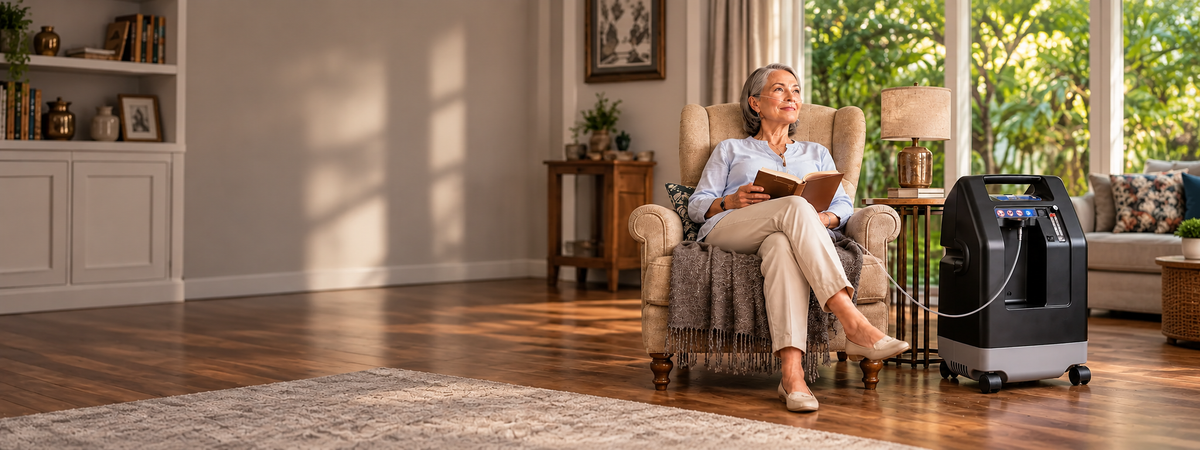
What are the best oxygen backup options for a power outage?
Different backup systems solve different problems. Electricity backup keeps a compatible concentrator operating; stored oxygen can provide an independent supply when arranged and used as prescribed.
| Option | What it offers | What you must check |
|---|---|---|
| Inverter + battery | Can power a compatible home concentrator during an outage. | Running watts, start-up load, AC output, transfer time and battery capacity. |
| Portable power station | Rechargeable battery with AC output on selected models. | Manufacturer-approved compatibility, actual usable capacity and runtime. |
| Portable oxygen concentrator | May run on its own charged battery; convenient for mobility. | Whether its pulse or continuous oxygen delivery meets the prescription. |
| Oxygen cylinder | Stored oxygen that does not depend on household electricity. | Prescribed flow, cylinder capacity, regulator, training and refill arrangements. |
| Generator | Potentially supports longer outages if correctly sized and installed. | Electrical compatibility, outdoor placement, safe transfer and maintenance. |
For patients who cannot safely tolerate an interruption, a single battery is not a complete emergency plan. Arrange a second fallback and identify a place with reliable power or medical care, as advised by the treating team.
Start with the patient's prescribed oxygen delivery and the equipment manufacturer's power requirements. No power solution or alternate oxygen device is universally interchangeable.
Can an oxygen concentrator run on an inverter or UPS?
Potentially yes, but only when the specific power system is suitable for the specific concentrator. Oxygen concentrators contain electrical components and, often, a compressor. The system has to supply the machine's required voltage, frequency and power, including possible start-up demand.
Check the rating plate
Find the input voltage, frequency, rated wattage and any start-up requirements in the device manual.
Confirm wave quality
Ask the manufacturer whether a pure-sine-wave AC supply is required or recommended; do not assume every inverter is acceptable.
Check changeover
Some UPS systems switch power almost immediately; others have an interruption. Confirm whether the medical device can tolerate it.
Test under supervision
Have a qualified professional check setup and runtime, and arrange a safe clinical backup during any test.
How much battery backup does an oxygen concentrator need?
Start with the concentrator's documented power draw and the usable energy in your battery—not just the headline battery size. Conversion losses, ageing and additional loads can shorten runtime.
Basic illustration
Estimated runtime (hours) ≈ usable battery energy (Wh) × inverter efficiency ÷ concentrator consumption (W).
This calculation is an illustration, not a medical-device specification or a runtime guarantee.
Worked example
Suppose a hypothetical unit draws 300 W, a power station offers 1,000 Wh usable energy, and system efficiency is 85%.
1,000 × 0.85 ÷ 300 = approximately 2.8 hours, before extra contingencies.
Actual demand can vary with model and operating conditions. Request a compatible system with tested runtime and a meaningful reserve, plus a second emergency oxygen option if prescribed.
1,000 Wh usable battery × 85% efficiency ÷ 300 W device load ≈ 2.8 hours. This is a theoretical estimate, not a tested medical backup duration; build in additional reserve and a clinician-approved fallback.
Can a portable oxygen concentrator work as emergency backup?
A battery-powered portable oxygen concentrator can help during power interruptions when it is clinically appropriate for the user. But many portable devices deliver pulse-dose oxygen rather than the continuous flow supplied by many home units. The setting numbers are not automatically equivalent to litres per minute.
The correct choice depends on the prescribed oxygen delivery, activity and rest requirements, the patient's breathing pattern, and whether the machine is suitable during sleep. Your clinician should verify compatibility before you rely on a portable machine as a substitute.
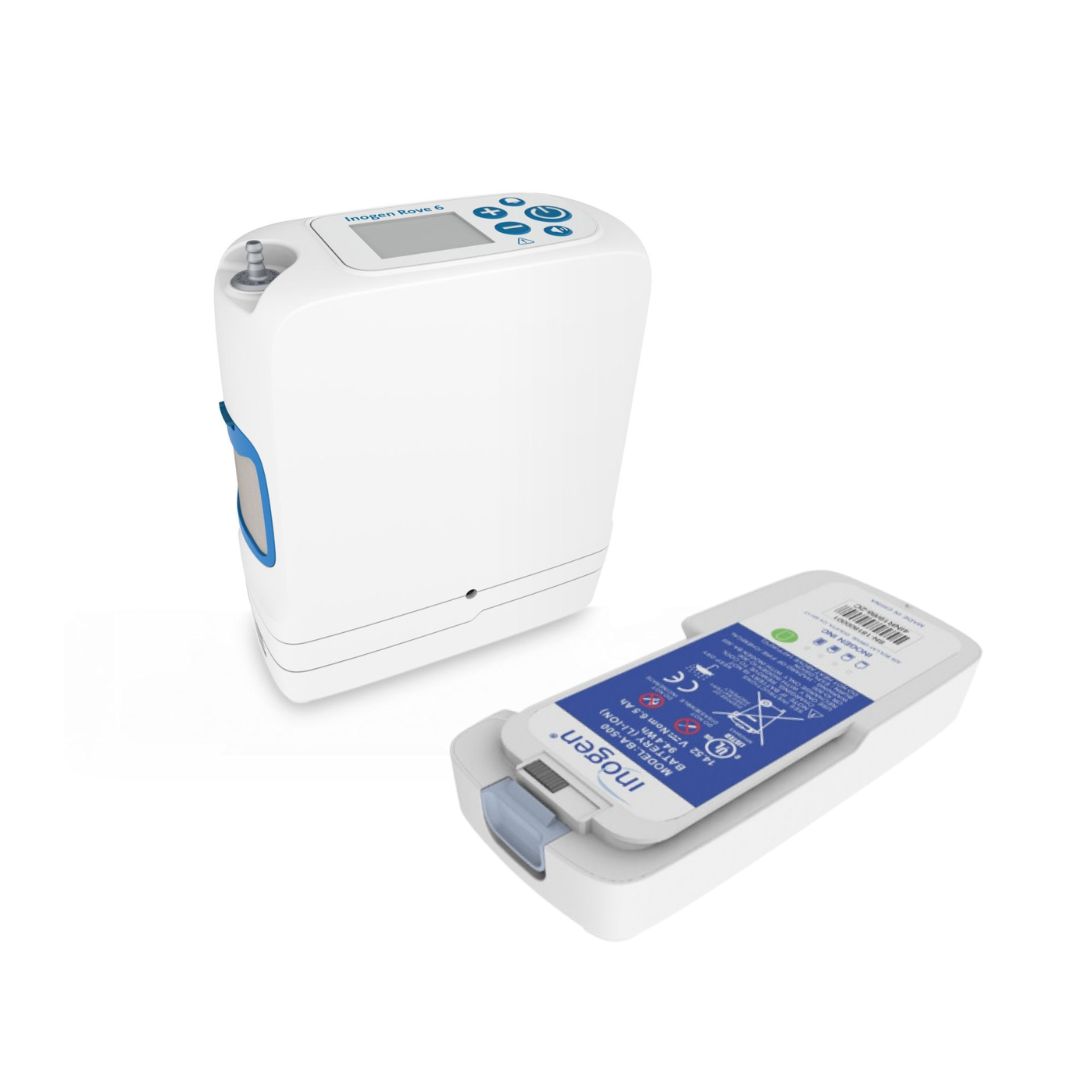
Inogen Rove 6
Battery-powered pulse-dose portable concentrator. Runtime depends on flow setting, battery choice and operating conditions.
- Portable
- Battery-powered
- Pulse dose
AirLux & other models
Compare delivery mode, compatibility, charging options and the actual runtime at the intended setting.
- Check delivery mode
- Check battery
Spare batteries & chargers
Keep compatible batteries charged and review the approved mains and vehicle charging instructions for your model.
- Check compatibility
- Plan charging
Never reduce oxygen settings to make a battery last longer unless the prescribing clinician specifically instructs you to do so.
For a deeper explanation of the different delivery methods, read our continuous flow vs pulse dose oxygen guide. Compare battery options through OxyMed's oxygen accessories and batteries collection.
Should you keep an oxygen cylinder for load shedding?
For some people, a properly arranged oxygen cylinder is an important backup because it contains stored oxygen and does not need household mains power. It is not automatically suitable for every patient or every prescribed delivery system.
Your oxygen supplier and clinician should confirm the cylinder type, regulator, prescribed flow, expected usable duration and how to switch from the primary system. Ask about refills, secure upright storage, transporting the cylinder and how the caregiver will check the remaining supply.
No smoking, naked flames or oil-based products near oxygen equipment. Secure cylinders properly and keep concentrator air inlets clear, following the respective product manuals.
If oxygen delivery stops and the person is in distress, follow their emergency plan and seek urgent medical assistance. Do not improvise a substitute treatment.

Your 8-point emergency oxygen checklist
Write down the prescription
Record prescribed delivery method, flow/settings and any special instructions from the clinician.
Identify equipment
Keep the exact model, manual, manufacturer and supplier contacts together.
Confirm backup suitability
Get advice on compatible batteries, inverter/UPS output or stored oxygen arrangements.
Know realistic duration
Record verified runtime and how you'll respond before it runs out.
Keep supplies ready
Charge batteries, check cylinders and keep necessary approved accessories accessible.
Train a second person
Show a caregiver how to recognise alarms and follow the approved changeover plan.
Prepare a safe destination
Know where to go if the outage exceeds your backup capacity or the patient becomes unwell.
Review and practise
Recheck batteries, contacts and instructions regularly without interrupting essential therapy.
What should you ask before buying oxygen backup equipment in South Africa?
Ask for a written quote tied to the exact oxygen device and treatment requirements. Request the equipment's rated running load, peak demand, approved power source, tested backup duration, warranty and maintenance arrangements.
Will the backup deliver the oxygen mode and settings the patient needs?
Has the proposed power source been approved for this model?
How long will it run under the intended conditions, with reserve?
Who assists with setup, servicing, faults and urgent replacement?
For mobile oxygen equipment, explore OxyMed's portable oxygen concentrators. For home-based treatment, speak to the team about the specific concentrator, its operating requirements and the most appropriate backup arrangements.
If you are evaluating the overall budget, see how much an oxygen concentrator costs in South Africa. Start with an appropriate prescription, then compare the home oxygen concentrator range, portable machines, and oxygen cylinder kits for any clinician-approved backup.
Continuous flow vs pulse dose explained · Oxygen concentrator pricing in South Africa · Replacement batteries and oxygen accessories
Let's make sure you're prepared before the next outage.
Tell OxyMed which oxygen machine you use and whether you already have a clinician-approved backup plan. Our team can help you compare available equipment and confirm specifications; your clinician must determine which oxygen delivery is medically suitable.
Oxygen concentrators & power outages: FAQs
Will a home oxygen concentrator run when the power goes off?
Most stationary home concentrators need continuous mains power. Without an appropriate backup power source, oxygen production and delivery may stop. Check your specific machine's instructions.
Can I plug my oxygen concentrator into any inverter?
No. Confirm the device's approved input type, rated and start-up power demand, wave quality, changeover behaviour and adequate runtime with its manufacturer or authorised supplier.
How many hours will a 1,000 Wh battery run my oxygen machine?
It depends on the device's power consumption, usable battery capacity and system losses. A hypothetical 300 W load with 1,000 Wh usable energy at 85% efficiency suggests roughly 2.8 hours before additional reserve; real performance must be verified.
Is a portable oxygen concentrator the same as a home concentrator?
Not necessarily. Many portable units are pulse-dose, while home concentrators commonly supply continuous flow. Different modes and setting numbers are not directly interchangeable. Ask the treating clinician before substituting one for another.
Is an oxygen cylinder a good emergency backup?
Stored oxygen can provide an electricity-independent backup for an appropriately prescribed patient. The clinician and oxygen supplier should confirm cylinder sizing, required regulator, duration, safe handling and changeover steps.
Can I reduce the oxygen flow to conserve backup power or oxygen?
Do not alter prescribed oxygen delivery simply to extend runtime. Contact the prescribing clinician for a safe plan.
Can I use a generator indoors or in the garage?
No. Fuel-burning generators produce deadly carbon monoxide. Follow the manufacturer's instructions for safe outdoor operation, electrical connection and placement well away from openings.
Where can I get help choosing an oxygen backup plan in South Africa?
Start with the clinician responsible for the patient's oxygen prescription, then speak to an oxygen equipment supplier such as OxyMed about products, compatibility and available support.
Medical & safety references
The guidance above is informed by these organisations. Confirm electrical requirements with the manufacturer of your exact device.
- American Lung Association — Preparing for a Power Outage as a Medical Device User (2024).
- American Lung Association — Power Outages and Lung Health (2025).
- American Lung Association — Oxygen Therapy: Oxygen Delivery Devices and Accessories (2026).
- American Lung Association — Using Oxygen Safely.
- US Food and Drug Administration — Tips About Medical Devices and Natural Disasters.


